"He did a lazy sway . . . To the tune o' those Weary Blues. " --- Langston Hughes

Photo entitled "Jazz City" (NYC, 2007) by William Ellis
William Ellis's Website
William Ellis's Blog
Showing posts with label country. Show all posts

Sep 28, 2006

Country Sound in a Big City


If you only had to go on the music of Jonah Smith, chances are you'd probably think he lives in Nashville or New Orleans, but in reality he resides in New York City - a city that has a little or even a lot of everything when it comes to music.

Smith, 30, who rocks out as much as one can on a Fender Rhodes, is the songwriter behind some of the most expressive, serene and soulful compositions of the year all on his self-titled debut album on Relix Records.

“I didn't really have a specific thing in mind, like I wanted to play American roots music when I moved to New York,” said Smith. “I moved to New York to be a songwriter and to be a musician. This is my first national record, I guess you could say. I've recorded two other albums before (one jazz-inspired and the other classic R&B) independently and each record is pretty different from the last one.”

Sep 20, 2006

Live Sounds Caught on Tape


In what seems to be its most political album to date, Gov't Mule has not only created a work that is a sign of the times, but has also captured the effervescent and vigorous sound trademark to its live shows.

Gov't Mule - Warren Haynes (vocals, guitar), Danny Louis (keyboards), Andy Hess (bass) and Matt Abts (drums) - is coming to town next week performing at the Wiltern Theater in support of its new record, “High & Mighty,” now out on ATO Records.

“We've always had subtle political statements on our albums, but not to this obvious of an extent,” said Haynes about the new work.

In recording “High & Mighty,” all four band members sat around in one room to record the 12 original songs. Some were recorded in New Jersey, but most in Austin, Texas, miles and miles from New York where most of the band resides (Haynes, Hess and Louis live in Manhattan, Brooklyn and upstate New York, respectively). The album marks the second trip into the studio with the current lineup; the last was for the album “Déjà Voodoo.” Based in the rock idiom, the songs reflect a jazz sensibility in terms of the instrumentation with hints of Latin, reggae and blues sounds mixed throughout.

Sep 8, 2006

The Story Of Ollabelle


“Ollabelle came together because of these musicians' love of this music, without thought of success or career or any of the other trappings of the modern professional music business. It has great value to our culture, adding new life to a tradition that is an important part of who we are. But mostly, they sound great. They sing great and they play great, and they are wonderful people,” said legendary producer and musician T-Bone Burnett of the band Ollabelle.

Named after Ola Belle Reed, a traditional North Carolina Appalachian singer born in 1916, the quintet of New York City transplants (with the exception of singer Amy Helm) all met at the Nine C club in Manhattan's East Village now called Banjo Jim's. One of its members, Tony Leone, a Connecticut native, migrated to the big city of dreams to work as a jazz drummer, and met bassist and former Indiana resident Byron Isaacs; guitarist and singer Fiona McBain, from Sydney, Australia; and keyboardist Glenn Patscha, originally from Winnipeg, Canada, who spent about 10 years living in New Orleans.

Nov 17, 2005

Record Pile: The Legend of Johnny Cash


The life and times of country icon Johnny Cash, who died in September 2003 at the age of 71 and was admiringly known as the “Man in Black,” has not only surfaced on the silver screen in the biopic film “Walk the Line,” but also in the form of a new album featuring songs that span his entire career from 1955 to 2003.

The 21-track disc and 16-page set of liner notes showcases Cash’s prolific career with songs like “Folsom Prison Blues,” “I Walk the Line,” “Ring of Fire,” “I’ve Been Everywhere” and the tune “The Wanderer” - a duet with U2 and taken off the group’s album “Zooropa.” The new Cash collection, which came out in late October, is a preview to the new film “Walk the Line” due out this week starring Joaquin Phoenix and Reese Witherspoon. Cash is famous for his smoky baritone voice and writing songs with bare acoustic guitar lines and combined elements of not only country but rock ’n’ roll and folk.

Cash was born and raised in Arkansas, and began writing his own songs at the age of 12. Following his college graduation, he enlisted in the Air Force at the onset of the Korean War and it was then that he bought his first guitar. He later left the Air Force, married a woman from Texas in the mid-1950s and moved to Memphis.

Cash signed with Sun Records and the label’s founder billed him with the first name “Johnny” which annoyed Cash because he thought it sounded too young. Cash’s classic hit “Folsom Prison Blues” and “I Walk the Line” ranked in the country Top 5 and No. 1, respectively, and some of his hits crossed over in the pop music arena. He wore all black when he performed, earning his famed nickname. Cash eventually left Sun Records and signed with Columbia Records in 1958.

With a continuous influx of hits and playing about 300 shows each year, Cash began taking amphetamines to keep up with his grueling schedule. His career went downhill with his increase in drug use. By 1963, Cash had moved to New York City and had a few run-ins with the law. Cash got back on top with the song he co-wrote with June Carter, “Ring of Fire.” His bout with drugs publicly sprang up again when he was arrested in Texas for trying to smuggle in amphetamines in his guitar case. His wife later divorced him and he then became close friends with Carter, whom he eventually married and who helped him kick his habit.

In 1963, Cash released his most recognizable album, a live recording at Folsom Prison, and over the years he has recorded with Bob Dylan, performed for President Richard Nixon and starred with Kirk Douglas in the film “Gunfight.” His wife Carter Cash died in May 2003 and Cash died four months later from complications from Diabetes.

“The Legend of Johnny Cash” is a single disc treasure that reflects a series of hits from a longtime career without the price of a box set. It is a smart buy for both the Cash aficionados and the novice listeners.

Aug 11, 2005

Q&A: (Shelby Lynne)


Ever since the advent of longtime popular expressions, people have managed to transform the original intent of common phrases by using them in a scenario that isn't exactly the most appropriate to its true meaning.

One example is the term "suit yourself," which frequently appears in conversations conveying a tone of disagreement. One person may wish to go, for instance, to a tailgate party before a football game while another doesn't, and might subsequently hear, "OK, suit yourself," which seems to infer that by disagreement one is missing out on something.

The phrase, in all of its proposed meanings, seems the most appropriate when used in the context of neutrality - a statement that someone should accommodate one's self by acting in a manner that best fits one's own disposition exclusive of anyone else's actions.

The term seems to have been used as intended in the case of musician Shelby Lynne. She aptly titled her latest work "Suit Yourself" based on what one can only assume was how she wrote and recorded an album to her liking, which is now out on Capitol Records.

Feb 17, 2005

Live Report: Steve Earle @ Henry Fonda Theater


If you're someone who's satisfied with the policies of the current administration, support the war in Iraq and voted for George W. Bush this past November, chances are you skipped Texan native and rock veteran Steve Earle and his band The Dukes performing Friday night at the Henry Fonda Theater.

Earle, from a small town outside San Antonio, played most of his songs off his new album "The Revolution Starts ... Now," a collection of musical stories that personify his disdain for the current political climate in America and his stance against the invasion of Iraq. The album interestingly weaves his personal opinions by telling the tales of an array of personalities (including himself and his family's history), some based in fiction and some in reality, who observe war from varying perspectives.

During the recording process, Earle and The Dukes - drummer Will Rigby, bassist Kelly Looney, guitarist Eric "Roscoe" Ambel, percussionist Patrick Earle and several others - worked 12- to 14-hour days inside a studio in Tennessee. In between breaks, they would talk about "the war, the election, baseball and women, in precisely that order," he said. The album was recorded in the spring of 2004 since it was Earle's goal to put out a record that would weigh on issues affecting the country before the presidential election took place last fall.

"The Revolution Starts ... Now" is dedicated to the late Johnny Cash and Warren Zevon and released on Artemis Records. It's the 16th album of Earle's career that spans 30 years.

The work just earned Earle a Grammy for Best Contemporary Folk Album at Sunday's 47th annual awards ceremony. Earle has been nominated for nine Grammys throughout his career.

Born in Virginia where his father was stationed as an air traffic controller, Earle relocated to Texas with his family, grew up in a small town about 17 miles north of San Antonio and received his first guitar at the age of 11. At the age of 19, Earle left Texas for Nashville. Since then, he has been married six times to five different women and hit rock bottom as a junkie when he was arrested and sent to prison for possession of narcotics. He was paroled in 1994 and finally resurfaced as an alt-country legend.

On Friday, Earle, who is no stranger to writing socially and politically significant tunes, pontificated on the power of the working class, his fondness for Marxism and his beloved state of Texas.

Just as the recorded version of the song "The Revolution Will Not Be Televised" by Gil Scott-Heron faded out, Earle opened the show with the new album's title track. Its chorus is one which stays in the head because of its unique emphasis on certain syllables (Yeah, The Rev-O-Lution Starts Now.)

Earle then shifted gears and sang the country "Home to Houston" with a vocal twang that fits the character he becomes - a Texan soldier who seems disillusioned with the war and prays for home. Earle's tone captures the naivete of a young man questioning the Iraq war who then adopts a new appreciation for life and swears he'll do different if he can safely return to his country - "And I offered this prayer to my lord/I said, "God get me back home to Houston alive/And I won't drive a truck anymore."

Just in the same way Michael Moore's documentary "Fahrenheit 9/11" argues those without resources to attain upward mobility join the Armed Forces, sometimes become soldiers of war and inevitably pawns of white rich men, so does Earle's song "Rich Man's War."

"I have a lot of money for a borderline Marxist," said Earle. "This war was started by white rich men who are not going and their kids aren't going." Earle touched on the issue of the draft and said as long as there are young poor men who want a job or an education, there will be an endless supply of fire for the Bush administration. He then dedicated the song to the troops overseas.

Earle also performed the spoken-word lines of "Warrior" in a gritty tone on matters like the lack of media coverage of those who have died in Iraq. His verbal syncopation makes one think he's an avid listener of Tom Waits' "Nighthawks at the Dinner." Sitting underneath the loaded poetic lines came an opening and continuous guitar line reminiscent of The Doors' "The End," a drum pattern on the snare that one can't help but think of something from a military song and an instrumental hook line.

Rigby appears to appreciate both the delicacy of a shaker and the boldness of his base and floor tom drums, the latter sounds especially on tunes that have a heavier rock groove like "Ashes to Ashes" that seem to cushion Earle's singing. The song comes from Earle's 2002 release "Jerusalem," which critics also consider a political album.

Rigby also possesses a delicate touch on the brushes that he used on his kit with melodic care and precision for the acoustic "The Gringo's Tale" as Earle's guitar picking slipped beautifully in between.

The crowd - a notably eclectic one ranging from cowboys, to soldiers to indie rock folks - attempted to softly sing the chorus to the ode to Woody Guthrie called "Christmas in Washington" off Earle's 1997 "El Corazon."

Earle invited opening act Alison Moorer whose voice blows most recent Grammy winners out of the water. Moorer, originally from Alabama, is a country singer who has incredible range, pitch and a strong pulse on the emotion behind every word she belts out.

He returned to the stage for four encores and singing two Rolling Stones covers including "Time," the Beatles' "Revolution" and "New Companion" by Townes Van Zandt.

Oct 9, 2003

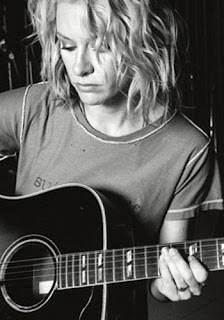
Shelby Lynne And Her Country Life

If one had to sum up the life of singer/ songwriter Shelby Lynne with one brief description, it could best be defined as a compelling verse to one very long country song.


Lynne's life and career as a professional musician - spanning 13 years - is the stuff country songs are made of.

Signed to a record deal as an 18-year-old from a small town in Alabama, Lynne had already endured what most never see in a lifetime by that point. About one year earlier, her father shot and killed her mother and turned the gun on himself in the family driveway.


Lynne and her younger sister, Allison, moved in with their maternal grandmother following their parents' deaths. Shortly after, Lynne met another musician who asked her to sing on some of his demos. Those demos ended up in Nashville where Bob Tubert, a well-known industry player, heard them and offered to represent Lynne.

She migrated to the famed Mecca of country music with her new husband, both of whom were 18. Shortly after her arrival, Lynne performed on Ralph Emery's "Nashville Now," a nightly television music and interview program. Several record producers caught the appearance and Lynne was offered four record deals within a week.

She initially signed with Epic Records and cut several albums under the label. After years of artistic differences and conflicts, Lynne got out of her contract with Epic and signed to the independent Morgan Creek label based on the West Coast. There she recorded a Nashville favorite, 1993's "Temptation."

Morgan Creek eventually went out of business and transferred her contract to the independent Magnatone. She then recorded 1995's "Restless" which never lived up to its predecessor. Feeling like she was hitting rock bottom, Lynne rented a $250-a-month room near the waterfront in Mobile, Ala., where she spent nearly a year staring at the Mobile Bay under the influence of various substances.

She eventually started writing songs again. MCA Nashville heard the material and offered her a contract, but she turned it down.

Rather, she sent her demos to producer Bill Bottrell, whom she liked for his work on Sheryl Crow's debut album.

Lynne later traveled to Bottrell's home in Northern California and the two worked on the acclaimed 2000 release "I am Shelby Lynne," an album that earned her a 2001 Grammy for Best New Artist.

Lynne immediately followed the work with "Love Shelby," a record cut under the production guise of Glen Ballard who is mostly known for his celebrated work with Alanis Morrisette on "Jagged Little Pill."

The work, comprising mostly refined rock and pop songs, generated divided reactions among her fan base and tanked in the commercial arena.

Recording and touring for both albums took five years and by the end, Lynne settled into her home in Palm Springs for a much-needed break. The time off proved productive for Lynne, who experienced creative bursts of inspiration, and began writing tunes that would make their way onto her next record, "Identity Crisis" (Capitol Records, 2003).

Wy sat down with Lynne and talked about her latest work, and the divergent artists who have shaped her style and partly fed her inspiration.

Wy: You produced this album by yourself and I would think these projects do have the potential of becoming challenging when the only opinion you have is your own. How did you approach the process?
Lynne: You know, it's the easiest stuff I've ever done, and you know why? There's no one else to argue with. Once I was satisfied, then I would bounce it off of me and then I would ask me about it and then I'd ask me about it again and then we all agreed.

In listening to 'Identity Crisis,' I can hear influences of some musically diverse people, but at the same time it's still signature Shelby Lynne. I love being able to listen to someone's work who's not worried about being inspired or influenced by someone else.

Oh, yeah, I mean how do you do it otherwise? I'm such a music fan that it would be difficult for me to be here period if I didn't admire people or dig on their work, and it does come out in my music. I'm proud of that. I have so many influences it's insane. I go from Elvis to Pink Floyd to Patsy Cline to Hank Williams.

The one thing that I got from this record is that it seems as though you're a really good music listener. So, how would you describe the relationship between being a listener of music and being a creator of music?

Well, I think in order to be a good musician, you have to be a good listener and in order to put on a great show, you have to be a good audience member. So in order to put on a good show, you have to be able to appreciate a good show. It's the same things with records. In order to make a decent record, you have to love a decent record.

The song 'Telephone' is great because for me it captures that feeling of calling someone, but hoping they don't answer.

Yes, that's it. The whole song is about that thing of not being able to stop yourself. No matter what, you're going to get drunk one night and make that call and then you think, 'God, I wish I hadn't.' But it's too late because you're thinking, 'God, maybe they won't answer,' but they do and now you're stuck. I think I did it last night. That's the beast of the telephone; it just happens and we all do it.

I was really drawn to the song 'If I Were Smart' and I think it's because I could really identify with the lyrics. I wanted to know if the lyrics on this album are based on older life experiences or if they are based on recent experiences.

Well, that's a good question because I think the songs on this record kind of reflect my whole life. Whichever song is brought up to me, I can think about an experience and then I can also relate that song to other experiences that had the same effect on me. I don't know how to write anything that's not personal and every song has something to do with me in that it either happened to me recently or in the past.

For me, the song 'I Don't Think So' is about stopping an unhealthy relationship which has turned into an endless cycle of bad behavior. I think it's different from other songs I've heard on the topic since it seems like you're talking about it as it's happening rather than talking about it after you've realized it.

The song is a conversation that's taking place, and it's about when I decided to sit down with that person and say 'I'm not going to do this anymore, goodbye.'

The tone of the music also matches so well with the lyrics. I wanted to know if you usually start out with the lyrics and build the music around them or if it's the other way around or if they both come at the same time.

It comes both ways and every song is different. I don't have a set pattern. I sit down with a guitar with nothing in my head and find some music that I like, or I have these words lying around for days, weeks or months and then develop them into songs. There's no particular form or method.

With the song 'I'm Alive,' you really slip into a character who kind of wants to get past the pain of a lost love, but it's also the realization that things could be worse. I'm wondering how you get back to the time and place when this happened? Since it might have not happened yesterday, it could have happened 10 years ago.

I love the written word whether it's books, song or poetry. I always see a visual in other works and with my songs I definitely do because it kind of comes with it for me. I can't imagine if the brain had nothing to do with it, and there was no visual. You'd just be out in limbo; there wouldn't be anything to attach it to. There would be no color, no form, nothing to see. So it's all visual for me and I have little movies going on inside my mind.

The song 'I Will Stay' reminds me of Jeff Buckley and something like 'Lonesome' reminds me of Patsy Cline. So because you have different singing styles, what about them do you like?

Well, when the song has written itself, it says, 'OK, I need you to sing me like this.' I guess I get into character mode. It's kind of like reading a movie part and you have to become a character, but of course I'm no actor. But in my mind, when I'm singing a song, I'm playing the role. I don't know if there is anything necessarily about my voice that I like. I haven't really thought about it. I feel like it's all right and it gets the job done. It's more about interpreting the message of the song and if it's tolerable, I'll go with it.