“I've really enjoyed the people I've been working with, so on the creative side of it, it's been really wonderful,” said singer/songwriter Glen Phillips about his career as a solo musician.
Phillips, formerly of the group Toad the Wet Sprocket, released his new work “Mr. Lemons” in 2006, and recorded it in east Nashville with a group of local players and some dear friends.
“There is definitely a character to players in Nashville and that has, I think, a really big effect on things,” said Phillips. “It was a really great group of people to be around, and that part was exciting. In Nashville, people just want to play, they are all about just working, and know they will get a job today and get a job tomorrow, and it's great to have people who will come in (to the studio) and do whatever it takes to make things sound good.”
 With more than four decades of musical experience under their belts, the members of the Irish Celtic band The Chieftains have quite a few interesting stories to tell, to say the least.
The band has either collaborated or performed with numerous artists from country darling Allison Krauss, jazz princess Diana Krall and her husband, Elvis Costello, to Sting, Van Morrison and Bela Fleck. Paul McCartney even danced a little Irish jig to their music when they played a few special tunes at Krall and Costello's wedding, where they exchanged jokes with Elton John.
“We often have that,” said Chieftains founder Paddy Maloney on surprise guest appearances. “You never know who's going to pop up.”
Other famous fans include The Boss himself, guitarist Ry Cooder, Gillian Welch and Dave Rawlings.
 Who says beautiful things can't grow out of Skid Row? With its debut album “Self Help Serenade” recorded in 2002 and now out on the streets in the U.S., the Los Angeles-based band Marjorie Fair has come a long way from its roots in Skid Row and will soon embark on a tour, opening for Sheryl Crow and John Mayer.
According to Evan Slamka, vocalist, guitarist and primary songwriter of the quartet, he and his band mates - Dain Luscombe (keys), Scott Lord (bass) and Mike Delisa (drums) - once lived in a loft in what the city technically deems as Skid Row and what Slamka calls “one of the strangest neighborhoods” in town.
“Living in L.A. is great, the weather can get kind of boring,” said Slamka, who now lives in Echo Park, “But as a musician you have to live in a city because it's hard to stay focused and busy when you're not around other musicians and art. It's pretty lively and vibrant here.”
 “Ollabelle came together because of these musicians' love of this music, without thought of success or career or any of the other trappings of the modern professional music business. It has great value to our culture, adding new life to a tradition that is an important part of who we are. But mostly, they sound great. They sing great and they play great, and they are wonderful people,” said legendary producer and musician T-Bone Burnett of the band Ollabelle.
Named after Ola Belle Reed, a traditional North Carolina Appalachian singer born in 1916, the quintet of New York City transplants (with the exception of singer Amy Helm) all met at the Nine C club in Manhattan's East Village now called Banjo Jim's. One of its members, Tony Leone, a Connecticut native, migrated to the big city of dreams to work as a jazz drummer, and met bassist and former Indiana resident Byron Isaacs; guitarist and singer Fiona McBain, from Sydney, Australia; and keyboardist Glenn Patscha, originally from Winnipeg, Canada, who spent about 10 years living in New Orleans.
 Born in 1978 to Argentinean parents and raised in the southwest region of Sweden, Jose Gonzalez grew up listening to a diverse array of music.
He lived in the country's second largest city, Gothenburg, which is situated along the western coast with a population of more than 800,000 - a metropolitan area home to a large immigrant population. Off the coast of the city sit a group of car-free islands known as the Southern Gothenburg Archipelago.
As a child, Gonzalez was influenced by his father's taste in Latin American sounds along with American and United Kingdom pop music.
Gothenburg is the center of a music genre known as melodic death metal and bands that reflect it such as At The Gates, Dark Tranquillity and The Haunted. It also boasts pop and indie rock spots as well and is home to the group Ace of Base. Coincidentally, Gonzalez was a member of several bands, some of which reflected the city's music scenes.
Gonzalez recently signed with Mute Records and the label re-released his highly acclaimed album “Veneer” April 4.
The work, originally released on Hidden Agenda Records in September 2005, went gold in the UK.
In 2004, Gonzalez won a Swedish Grammy Award for Best New Artist.
 For Canadian-born guitarist and singer Steve Reynolds, Los Angeles - a town stereotypically known for its film industry, shiny cars and palm trees - was the last place he thought he’d find a haven of talented musicians.
“L.A. in general is kind of a paradox,” he said. “I remember driving down here with girlfriends and they’d ask if I would ever want to come to L.A., and I’d always say, ‘Not a hope in hell, you’re not getting me inside L.A.’ because I had a perception of L.A. and all the cliches that go along with it.”
Reynolds relocated to California in the late 1990s and now resides in Echo Park, which many describe as a bird’s nest of talented musicians, many of whom relish in the notion of establishing an unfettered, eclectic enclave of troubadours that many outsiders wouldn’t normally associate with Los Angeles.
“My neighbors were in the Warlocks, and I just went down to local club Spaceland the other day and Daniel Lanois is playing, and the guy who opened for him is a good friend of mine,” said Reynolds describing life as an Echo Park resident. “Then you’re in the lineup and then there’s Gus Black and you realize how good everyone is. There is just an amazing melting pot of talent here.”
Reynolds’ current album, “Exile,” was released on 429 Records last month after he inked a deal with the label that is a pop imprint of Savoy Records.
“I’ve been gone eight years. Vancouver, I don’t have a huge connection to it,” he said. “I’m fortunate enough that my uncle has a big place on the water and a cabin set back in the woods that he gives me. I probably go up there once every six months to write, it’s just a beautiful idyllic setting with deer walking by and hikes to the beach. I take my laptop and some instruments and hole up for a week at a time, and that’s how I’ve been doing most of my writing lately.”
Reynolds keeps his brain active in terms of songwriting by jotting down musical ideas and playing the guitar in some form or another for a few hours each day.
“Songwriting is a crazy, unruly animal, especially the more your career unfolds there are the pressures that you put on yourself to do better and better stuff,” said Reynolds. “Playing live is the payoff, that’s where I really shine and feel the most connected to what I’m doing.”
What is most unique about Reynolds’ musical presence is his varying guitar tunings and impressive finger picking. He brings a subtle pop flare to songs that taste of quaint folk and searing guitar rock, along with percussion-based ditties reminiscent of Irish jigs. He is a young man with a big acoustic guitar sound that has the ability to melt the hearts of some of the most hard-core rock fans.
“For me, I tune the guitar many different tunings and that really dictates the melody to me, so once I’ve got something locked in then I will usually sing utter rubbish until something sort of captures me,” said Reynolds. “I remember writing ‘Miner’s Lamp’ and saying that phrase, I have no idea why, and that was all I needed, just one visual, and I can write the song around that.”
Reynolds’ melodies have a kind of romantic and nostalgic quality remindful of Bruce Springsteen and a voice that has a passionate yet delicate tone similar to Josh Rouse.
“Growing up in Vancouver with the rain and nature, it really armed you to sort of be engaged in the world and it’s a great place to sort of ground yourself whereas L.A. brings out the world of possibility and I really enjoy sunny days,” added Reynolds. “It’s sort of clich/ but you really do feel things are possible here.” Reynolds is playing at Fingerprint Records in Long Beach Feb. 4 at 1 p.m., a show sponsored by radio station KCRW, and March 7 at 9 p.m. at Hotel Caf/ in Los Angeles.
 For many musicians, the idea of recording five albums in five years can seem daunting or, for some, insane. But for San Francisco-based artist John Vanderslice, it’s just one of those things.
“Yeah, I don’t know what I was thinking. I must have low self-esteem,” explained Vanderslice about this five-year effort.
In his latest work, “Pixel Revolt,” Vanderslice recorded songs that touch upon issues such as the war in Iraq from the perspective of a Western journalist and a soldier, a musical love letter to an ex and the fascination with the Golden Gate bridge as a well-known locale for suicidal jumpers.
“For me I kind of have to have an idea of what the song will be about before I write it,” said Vanderslice. “I’m not very good at sketching out ideas on my guitar. For better or for worse, I wish I didn’t necessarily have to do that.” Vanderslice began writing songs for the album last September and finished in March. So the first batch of songs were deemed as highly political, a way for Vanderslice to work out his feelings stemming from the 2004 election and beyond.
“The record started out really political. I wanted to write a whole war record, but other things happened to me that became more important than writing abstract narratives, so I steered away from writing songs about politics even though I’m very interested in American imperial involvement,” added Vanderslice. “It’s hard to ignore and it fascinates me on a lot of levels.”
The lyrical tides changed when Vanderslice experienced a rough year of touring and fell deeply in love that later dissolved into a break-up. He said he usually doesn’t put his personal life on record, as the thought of it is not all that exciting to him.
“I would much rather not write about my life,” he said. “I don’t think people are necessarily that fascinating. Marcel Proust is fascinating. Oscar Wilde is fascinating. I live in a one-bedroom apartment and I walk to get a burrito every day. I’m not some workhorse. I have a very mundane life, by choice.”
Vanderslice is a quirky experimental pop solo musician who has made fans out of indie-rockers like Bright Eyes and Death Cab for Cutie. He enlisted the talent of friend and longtime collaborator John Darnielle of the Mountain Goats who acted as a co-writer for “Pixel Revolt.”
 For many people who leave their hometown to start anew, the nostalgia and appreciation for it only comes after they've been away for a time. Such an experience is what inspired a series of musical snapshots imprinted on folk singer and songwriter Tom Brosseau's new album, "What I Mean to Say is Goodbye."
Born and raised in North Dakota, Brosseau moved to California after college and first settled in San Diego before becoming a permanent Los Angeles resident.
"The long and short of it was that I had never seen the ocean, and it was such a thrill to come out here and live near it," remembered Brosseau as to the reason he migrated to California. "All my family, they all play music on both sides. I think everyone plays music back in North Dakota, it's such a tradition."
The instrumentation, stark and spare, is set under Brosseau's delicate and gentle voice, and makes every song richly beautiful, informing the listener about the kind of poignancy and emotion that is possible in simple music. In true Bob Dylan fashion, Brosseau's lyrics take center stage like a symphonic poem. It's American folk music at its best and every song is worth one's quiet and relaxing Sunday afternoon time.
"To me, people like Bob Dylan and Leonard Cohen are first and foremost writers, they are observers, and so I think it's very important to read and sing other people's work, so I've always had great passion for reading," said Brosseau.
Brosseau's lyrics range from loneliness on the road to the poetic beauty of North Dakota in the winter and the thrill of new romance.
"The first song is like little anecdotes of North Dakota and one of the lines deals with the flood of 1997," said Brosseau in his soft-spoken and welcoming voice. "It can be hard sometimes because you want to make a song sound personal but at the same time you want other people to be able to identify with it,"
Sam Jones, who produced the Wilco documentary "I Am Trying to Break Your Heart," also produced Brosseau's album. Brosseau is also a regular guest artist at the local hot spot Largo. Several guest musicians sat in on the album with the 28-year-old Brosseau including Benmont Tench of Tom Petty and the Heartbreakers, harmonium and piano; Sara Watkins and Gabe Witcher of Nickel Creek, violin; and Elvis Costello's drummer, Pete Thomas, accounts for the songs' percussion. L.A. musician Jon Brion accompanies Brosseau on the guitar for the song "St. Joe St."
"My friend John Doe calls my work prog-rock. I think the songwriter I am is that I concentrate on the story first and I'm not too concerned about structure, but more so about meter," said Brosseau. "So in the end I think it's kind of progressive, so, who knows, maybe I'm starting a new genre: prog-folk."
 The first time The Beach Reporter interviewed musician Paul Brill in January 2004, he'd already embarked on a different kind of musical pilgrimage in the writing of songs for his new album, "New Pagan Love Song."
At the time, Brill attributed his shift in symphonic direction as a departure from his past singer/ songwriter endeavors - "Sisters" and "Halve The Light" - and rooted himself in a solo exploration of the world of electronica, transpiring within the confines of his New York City apartment.
Since then, Brill has released the new album on his label Scarlet Shame Records, which achieves an intriguing and distinctive stylistic palette by incorporating samples, loops and beats from the electronic side with live acoustic instrumentation.
Of course, the method of fusing two stylistic palettes is nothing unique for either listeners or musicians, but the element that sets Brill's work apart from others on the market is his delicate approach to a new sonic medium and his strong footing in live performance. This kind of mindfulness is what creates the sentiment that he built the songs from the bottom up.
Aside from the engaging arrangements and charming melodies, Brill also illustrates his clever knack for writing poignant songs, which stream like miniature stories, augmented with keen imagery as he has demonstrated so impressively in the past on previous songs.
Brill, a native of New York, labored over the songs in his home and eventually recorded them with a group of rather impressive musicians whom he has collaborated with on prior recordings.
Brill this week talked about the new work and some of the stories behind the songs. He will perform at the University of Southern California April 5 and at Spaceland in Silverlake April 6.
I heard you were in the band SF Envelope while living in San Francisco. What ever happened with that group?
We were in California in the mid- to late-1990s and we had some good success in San Francisco. We had a nice following and we started to grab the attention of a lot of labels but we just decided to do it on our own and tour a lot. We were getting a lot of interest and by the end there were a few offers that were getting close but our hearts weren't in it as much. Personally, the music that we were doing didn't jive with what I was listening to and the stuff that I wanted to be doing, and it was hard to try to make that whole band change because it wasn't just me.
What kind of music was it?
It was rock. It was kind of loud and heavy at times, and sometimes it was really soft and ethereal. It was a very important and formative time in terms of getting to know the road and see if it was something that I would want to do, if I could hack it and get a taste for what the business is all about.
Is this time when you got into the whole country and bluegrass scene?
Yeah, pretty much. It wasn't just country but a lot of old-time traditional, American roots music, black and white and western swing and old country blues. But just not the straight-ahead heavy electric guitar with a Marshall stack. I haven't really done a lot of live electric work since then.
Did your opinion of the heavy stuff change for good?
No, I definitely love it still and I'll always lean back to that period. There was so much good music made then and a lot of stuff that is still being done now that I love. I'm still a sucker for a great pop rock song in an AC Newman kind of way, Fountains of Wayne, even.
Did this change in music alter your approach to songwriting?
Kind of. I think I pretty much have the same approach to songwriting initially up until this last record actually. I would still sit down with an acoustic guitar or piano, write a song, work out the words and come up with its structure. If I was in a professional studio environment there was always that limitation that I'm rushing through because of time and budgetary restraints, and we'd end up recording it very literally according to the way it was written. This last record, which I recorded myself, I had afforded myself a much broader and greater length of time and freedom to experiment.
The idea of telling a story in the context of a song has always been really important to you just like in many old country songs.
Yeah, especially on this record. I've always attempted to tell a story in a song and I think some of my earlier stuff was a little bit more oblique in the writing. I made a conscious effort on this record to try to be a little bit more literal and more direct with the narrative. Sometimes, I think it worked (laughs), it still has its oblique moments. I still got to keep a little mystery in it.
You're from New York City and live there now, but you have lived in the woods of Vermont for a couple of years, too. What do you think living in the city versus living in the country does for your creativity?
It's tough to say. I think I was too young to know any kind of difference in the inspiration or creativity. At this point, I think I'm a little too wedded to the lifestyle, buzz and rush of the city and its cultural assimilation. You walk down the street and you're bombarded with all of these images of culture and language, and it's overwhelming. It's also inspirational, eye-opening and mind-boggling - it's every emotion mixed into one. It's kind of a natural environment for me. There was a time when I was going to try and move back to Vermont and live that life, and I just don't think I could do it now. It's a little too homogenous, but there are elements of that life I do still miss. It was so bucolic and ideal, but that is the continual urge to get away from where you are, the grass-is-greener notion.
The last time we spoke, you mentioned how much time you were spending alone making music in the comfort and solitude in your own home. Did you ever find when working alone that you kind of got sucked into a space in which after a while you had some challenges in determining what was good, decent or something considered a dead end?
Sure, that's a great point. That's exactly what happens. I feel terrible for writers, it's just so much harder and a far nobler pursuit in my mind. Generally, when you do a record in a collaborative situation, there are people around you who are going to give you your feedback along the way and you do get a sense that you are accomplishing what you set out to accomplish. But when you're sitting at home for eight months laboring over tempos and moving things around - I was doing stuff that I had never done before with this record - and I remember thinking that people might not like this. I just thought that was where my heart was since I was listening to a lot of electronic music. I was reaching for something and I still am but I just had to try because I couldn't do another singer/songwriter record. It was killing me.
With this album, I think I was most impressed with the synthesis you've created between electronic textures and acoustic instrumentation. They blend so well together and it's nice to hear that kind of continuum.
A lot of it is happy accident. I really did think that I was going to be doing more of an electronic record, to me it was an electronic record, but then I listened back and it was my version of an electronic record. I didn't want to abandon songwriting or the organic side of what I do. I thought it would be interesting and fresh if I could somehow mix what I had been doing in the past, and bring in instruments and sounds that could elevate it and give it a distinctive voice. Each time you've got to step into the breach and just say, 'To hell with it," and go with what sounds good at the moment.
The song 'Weekday Bender' sounds like it was written on the beach somewhere about you and friends back in the day.
Yeah, that's way true, definitely. That's when I was living in San Francisco and it was a great time. I had just gotten there and my friends and I, none of us had jobs, and we would tour and rent out our apartments and hit the road for two months. We'd come back, live off the little money we made off the road and then go back out. We'd go on these trips during the week and let it rip. Those are some of my greatest memories and I made a conscious effort to capture that dusty California feeling in the song.
From this song you transition to a song like 'Power Lines' which I don't know if it was written in the winter but it definitely feels like a winter song.
Yes, it was and it is a wintry tale. It is a very autobiographical song, probably the most I've ever written. It was really satisfying to record and I struggled with it because I didn't want it to be a sappy acoustic guitar ballad. No disrespect to anyone who does that, I've done plenty myself. I feel like I hit something new with myself.
One of my favorite songs is 'Everything I Believe In' which has a beautiful sound to it but with some sad lyrics.
That song is loosely based on a friend of mine who was killed. It's just a horrible story. He called me to say that he was moving to New York, he had just got a job here and the first day he was here, he went out with his sister. They came home really late and a little drunk, and he and his friend went to an ATM to get money for the cab. They were held up and details are pretty sketchy, but the story his friend tells is that he was going to fight the muggers and they just shot him, but there was a big investigation and they actually arrested the friend on suspicion. It's still an open case.
 In his recent autobiography entitled "Chronicles: Volume One," legendary musician Bob Dylan writes frankly about his life as a musician spanning back to when he first arrived on the scene in New York's Greenwich Village in 1961.
Born Robert Allen Zimmerman in Duluth, Minn., in 1941, Dylan talks about his destiny to write and sing songs, and his travels to and life spent in one of the most influential cultural and musical hot spots of the 1960s.
As a folk singer, Dylan met numerous performers including singer Richie Havens whom he, "...crossed paths with a lot" and emerged as a strong talent in Greenwich's folk scene just as Dylan did.
"...Richie Havens always had a nice-looking girl with him who passed the hat and I noticed that he always did well. Sometimes she passed two hats," Dylan wrote. "If you didn't have some kind of trick, you'd come off with an invisible presence, which wasn't good."
Havens was born and raised in Brooklyn, moved to the Village in 1960 and lived there until 1969. He still has an apartment there and also resides in Jersey City, N.J., where he makes most of his music. He has played concerts as diverse as Woodstock in 1969 with musicians like Janis Joplin, The Who, The Band and Jimi Hendrix to President Bill Clinton's 1993 inauguration celebration.
He only discovered Manhattan at the age of 16. Havens remembered Brooklyn as a residential area without any tall buildings for miles. Many families spanning three generations all lived under one roof, and he grew up in a neighborhood with people of a wide variety of ethnic backgrounds from Spanish, Russian and Polish to German and Italian residents. Havens, who was the eldest of nine children and organized doo-wop groups in his neighborhood, moved to Greenwich when he was 20.
He was Woodstock's first performer and played to a crowd of about half a million for nearly three hours after being called back to the stage for encore after encore.
He landed a deal with the Verve Records label in the late 1960s and released his debut "Mixed Bag" in 1967. Since then, Havens established his own label, Stormy Forest, in the 1970s and has recorded 29 albums.
Havens' own influences are just as diverse as his Brooklyn neighborhood. His favorites are albums like The Beach Boys' "Pet Sounds," The Beatles' "Rubber Soul" and "Sketches of Spain" by Miles Davis; songs like "Positively Fourth Street" by Bob Dylan (recorded on his 1967 greatest hits record); and works by Rage Against the Machine and Eminem.
The Beach Reporter recently sat down with Havens and talked about his new work, "Grace of the Sun," his life's work and his memories of New York City.
The Beach Reporter: You cover Joni Mitchell's 'Woodstock' on your new album. Was it somewhat easy to capture the emotion of this song since you were actually there?
Havens: What really kind of blew my mind is that I never really sang it before I recorded it. I've always enjoyed Joni's and Crosby, Stills and Nash's versions. It kept coming into my head while I was recording the album. I kept hearing Joni's version in my head and after all these years I never sang it on stage. I actually learned it a long time ago but I never performed it. There is a rule that I have that is if I learn a song today I play it tonight and if I don't play it tonight then it never gets to the stage. There is a reason for that for which I am still searching (laughs). Sometimes I've learned a song thinking I'm going to put it on the album and it just doesn't make it on it when I get to the studio maybe because I've written three other songs and I put it off to the side. But four albums later, it has become the first spoke in the umbrella. Usually, it has to do with the times that it happens in, that it means something to me now much more because of what the conditions are we are living in. That's why a song will jump up and say, 'I'm first.' It gives me that starting point. My albums come to me as a title and I actually have only three albums that actually in some way reflect the title of the album. All the rest have been conceptual titles, which I call the umbrella and the songs that fit underneath that context are the spokes.
So this new album falls into one of three works?
Well, 'Grace of the Sun' is the name of it, but I actually didn't write the song 'By the Grace of the Sun' until I was already into recording the album. So that even came afterward. It was in reverse. It became somewhat of a title song. For me, I don't sit down to write songs. I stopped doing that in 1960 when I first came to Greenwich Village. Before that, I wrote 20 songs a day because I was singing doo-wop with my friends on the street corner, you know, that rock 'n' roll thing, and I'm a rock 'n' roller by nature. All through that time I was in Greenwich Village, I realized I was no longer in show business which doo-wop music was to me.
Whom did you become when you arrived in Greenwich Village?
I had crossed over into the communications business and the songs I sang in Greenwich Village when I first started were songs that were written and sung by three or four of the guys who were already there and had changed my life. Each of those songs changed me in a real big way because I had never heard songs that were all encompassing, speaking about the conditions we all live under; speaking about things we should all be thinking about. So, those were the songs I started singing at first and I still probably sing half of those songs today or else my fans would beat me up outside (laughs).
As far as the songwriting process, what do you feel you've tried to master over the years?
It would have to be getting out of my own way and letting the song actually happen. When I write a song, the title comes to me maybe while sitting in a taxi or walking down the street and I instantaneously know what the whole song is about. I go home or grab a napkin and write it down. I've probably changed only eight words in the last 30 years in all of the songs I've written. They come out whole. Sometimes a musical idea will stick in my head and I keep playing and playing it but I refuse to sit down and write to it. I play it until the first line falls out of my mouth and when that line comes, I realize the music is telling me what to write down.
Has the process then become easier over the years?
It's never been difficult at all because when it comes I write it down for sure. I make sure I get it down. Sometimes I write a song and I look at it and think, 'Where did that come from?' Only after I get the chance to listen to the song after I've recorded it some way is when I really get the layers that it has.
In looking back, what are some of your personal favorites?
Well, there are so many. The fact that I'm singing it makes it a favorite. I can't even remember what song is on what album. For me, once I've finished an album, I actually don't listen to it again. I used to run when I heard myself coming over the radio. I still feel that way, but I don't know, I think it's a good thing.
In selecting other people's songs to sing - 'All Along the Watchtower' and 'Woodstock' - how did you pick these two songs when looking at the life's music of both Mitchell and Bob Dylan, and all of the songs they've written?
Well, I'm fortunate enough to have recorded more Dylan songs than any other person besides himself (laughs) along with Beatles songs. It's because they were part of that condition. They were part of the times that we were in. I may be recording it 10 years later but I feel right now these songs signify their prophetic nature. Through the years, 'All Along the Watchtower' is one of the most requested songs besides 'Just Like a Woman' and some of the older ones. When I play on stage I know the first and last song I'm going to play and everything else in between happens to the audience as well as me. So, 'All Along the Watchtower' has always been a good starting place for me because it has so much energy and a poetic consciousness to it. If you listen to the words you have to think about it, what could this song possibly mean? Dylan was like that; he's what I call the all-inclusive songwriter. All of the characters he wrote about we knew, so for me it was a way of carrying on something for those who have never heard the song and may get something out of it.
How do you think Greenwich Village has changed over the years?
The only difference I can see is that there is beer instead of coffee. There are still a lot of runaways down there with guitars, trying to express themselves. A lot of young talent still goes through that place.
 Many people would agree that life in London is practically the polar opposite from life in Los Angeles. From the obvious cultural and social distinctions to the dissimilarity in weather patterns - Southern California's year-round and temperate conditions compared to England's dreary fog and rain - the two cities seem worlds away from each other.
For the English-born songwriter Tom McRae, Los Angeles, specifically the Los Feliz and Silverlake areas, became his home for a year as the setting and recording base for his most recent album, "Just Like Blood."
"If you're an artist, you're always searching for situations where you're new, where you feel like a beginner," said McRae. "For every part of life in which you feel settled and comfortable, that's a dangerous time. You want to always push yourself into new areas and that's why I moved to L.A. for a year. I wanted to be somewhere where I would almost have to start again from scratch with different influences."
The Beach Reporter talked to McRae by telephone during his small West Coast tour while he was in Seattle where he said the northwest city, like most days, was gray and overcast.
"It's looking like it might rain and after spending a year in L.A., to me that sounds like heaven right now," he said.
McRae relocated to Los Feliz at the beginning of the year. He eventually met a group of local musicians who all decided to move into a house in Silverlake where he made the record.
"That part of Los Angeles is great. It's really hard to find places that are like neighborhoods in L.A. Los Feliz is like a little neighborhood and Silverlake is just great. There's so much going on; you can walk around to a lot of places so it almost felt like home" said McRae. "I think everything you do inspires you and sort of informs you of your next songwriting phase. I was touring a lot with the first record, and you meet different people and see different things. I wanted an album that reflected that, and reflected a slight disconnection from the world and the life I had known. It's all those feelings and experiences of traveling and leaving things behind - a world of perpetual motion, really."
McRae released his debut, self-titled album in 2000 that later won him a Mercury Music Prize, an award sponsored by the Nationwide Building Society in the United Kingdom. An independent panel of judges selects a handful of records as "Albums of the Year" and then meets again the night of the awards to choose an overall winner of the prize. Badly Drawn Boy's "Hour of the Bewilderbeast" won it in 2000. Since 1997, the Mercury Music Prize has been one of the UK's most prestigious awards.
McRae then followed up his debut with "Just Like Blood." In between works, McRae spent the majority of his time on the road playing all over Europe and America. Just in the same way London inspired the first album, the experiences on the road were what gave McRae material for his second, especially small industrial U.S. towns along with the off-the-beaten-path locales in Los Angeles, which McRae described as "... places in L.A. where it's just insane."
"Having never been to America up until that point (a North American tour that followed McRae's debut), it was a whole adventure for me," said McRae. "It was amazing to see places like L.A., Chicago, New York, but also tiny out-of-the-way places as well. Finding out about this country was all a part that went into making the record."
McRae's latest work is even darker and more romantic than its predecessor. It serves as a musical testament to his exploration into a more expansive sound and style. McRae expands on his affinity for themes stemming from displacement and unhappiness based on the yearning of escape. It's similar to that of the first album but rather expressed from the post-flight perspective. It centers on the idea of finally achieving breakout only to discover that the feeling of discontent is still present. It's the notion of chasing after something that always seems just out of reach.
"I think people listen to my songs for different reasons at different times in their life and if you write sort of melancholy music, it doesn't necessarily mean you are a manic depressive. You're expressing that part of life," said McRae. "In doing that, the same way you put on a sad album, it kind of gives you hope and I'm not sure why. Some people say it makes you feel that you are not alone. I'm not sure if that's true. I think there's something notable about hearing someone translating that sad energy into something else. You sing about it, you change it and it automatically becomes hopeful because if you were really in despair, you'd just go ahead and shoot yourself. It's all about trying to turn bad energy into good energy."
"Just Like Blood" is your standard gloom-and-doom record from a depressed singer/ songwriter and perhaps that is why McRae is so often compared to the genius of Nick Drake who gave the term despair a whole other meaning. But in the midst of all the darkness, there is something tenderly uplifting in both Drake and McRae's tunes - everyone can connect or identify with the life of a troubled person, and in some way can learn from another's heartaches. It's the age-old concept that we are not alone in our struggles.
"I think if you're happy, you're in the moment, and happiness is really nebulous and hard to pin down," said McRae. "When you try and sit down and write about those times, it never really works for me. It always sounds false, like you're deliberating trying to sound nostalgic whereas painful times seem to linger for longer and you carry them with you because there are more lessons involved."
The 28-year-old McRae grew up in a rural village in Suffolk, a town without a pub but with two operational churches and a total population of 250 people. McRae's parents, both of whom were vicars, split when he was 8 and he went to live with his mother. It became McRae's self-proclaimed destiny to leave his hometown and move to the cultural and urban hub of England: London.
"I've been sort of terrified of being in the countryside now for years," said McRae. "As soon as I leave the city and I leave anywhere that has high-rise buildings, and I start to see too much sky and too much of the horizon, I get scared. I want to feel claustrophobic and paranoid, it makes me feel at home right now."
McRae eventually moved to London as a young adult and set out to form a band. He later signed a deal with db Records and recorded his debut. On "Just Like Blood," McRae touches upon the flaws in contemporary culture and society on several songs like "Karaoke Soul."
"Every aspect of our society and culture has now been reduced to a competition with predetermined results, much like American elections," explained McRae. "Pop music is an interactive soap opera. TV and newspapers are celebrity court circulars telling us what the new kings and queens of light entertainment are up to now."
 For singer, songwriter and guitarist Matt Nathanson, it's difficult to not think of life on the road as a home away from home. He has played 600 shows in 400 venues over the last several years in a music career that dates back to 1993.
For Nathanson, existence in transit can be characterized in no other way than as being bittersweet since it's the constant touring that has earned him a stout grass-roots following across the U.S. This is partly responsible for his deal with Universal Records but has also kept him away from his wife and permanent residence in San Francisco.
Born in Massachusetts, Nathanson began playing the 12-string guitar in sixth grade since it was this kind of guitar that all the 1980s big-haired, metal rockers - bands like Poison and Def Leppard - were using at the time for songs like Poison's "Every Rose has its Thorn."
"I had this coolest teacher ever when I was in sixth grade. You could bring in any song and he would figure out all the guitar parts that made up that song. During the course of the lesson, he would teach you," recalled Nathanson. "So, I learned how to pretty much play guitar that way."
Nathanson, who graduated from Claremont McKenna College, one of five independent undergraduate universities in the San Bernardino area, didn't pick up a six-string until college. It was also at this time when Nathanson discovered people like Bob Dylan, Elvis Costello, Neil Young, and Lou Reed and the Velvet Underground.
"You don't necessarily move on from the people you dug as a kid but you have to augment it with things because you become multifaceted, hopefully," remembered Nathanson. "In college I had a really good friend who schooled me and broke me open to a whole other world of music. It was stuff I didn't know existed, and Dylan did change my life. I know everyone says that but it's true, he's just such a bad ass. I was so ready to receive that kind of music at that time in my life that it almost came at a perfect moment."
Nathanson, now 31, released five albums - the debut "Please" in 1993 - as an independent artist with his last in 2002 entitled "Everything Meant Everything." Over the years, he has toured in support of his work. Fans have traveled near and far to catch one of Nathanson's shows mostly due to word-of-mouth promotion with a Web site that accumulates more than a million hits each month. In the past two years alone, Nathanson has played 250 shows.
He inked a deal with Universal last fall and recorded his latest work, "Beneath These Fireworks," in 2003 which was produced by Ron Aniello (Guster and Barenaked Ladies). The new album is a departure from his past work in that it features an entire band rather than the usual acoustic vibe comprising Nathanson, his acoustic guitar, and cellist and longtime friend Matt Fish.
The album is pop music heaven with incredibly rousing choruses on virtually every mid- to fast-tempo song, and quaint and exquisite melodies on the slower tunes. The lyrics enhance the mood of each song and cover everything from vulnerability, lost love and escaping one's emotional baggage to a sense of spirit and the realization of contentment, most of which were co-written by Mark Weinberg.
"He and I are best friends, and so we sort of have the same interest when it comes to what songs should do. So when it comes time to write songs we just sort of sit around and 'geek out' and try to impress each other with our ideas (laughs)," said Nathanson. "Writing solo takes a really long time for me. Things are kind of stalled on the detail of the song, and it's kind of like puking out all of your ideas and weeding through them later and refining them. It's the same concept when collaborating but when Mark is around for me, I don't get caught up in the details as much."
On "Beneath These Fireworks," Nathanson had the chance to work with a group of seasoned studio musicians like drummer Matt Chamberlain (Brad Mehldau, Tori Amos, Fiona Apple), bassist Sergio Andrade (Lifehouse) and guitarist David Garza (Juliana Hatfield), while Glen Phillips, a former member of Toad the Wet Sprocket, added a few harmonies over some of the songs.
"I made a master list of people, and Matt was the No. 1 drummer and so on. When I brought the songs to them I kind of let go of everything. I mapped out everything and the idea was that if I have these great players, it's going to be better to let them really play these songs," explained Nathanson. " I went in with pretty detailed songs and I let the natural order of things happen. They just rocked it." Nathanson, whose influences range from U2, Bob Dylan and R.E.M. to Def Leppard and Poison remembers his first musical memory was when he first heard KISS.
"When I was a little kid my parents used to listen to 'Annie' and 'Oliver.' They were into the Broadway musicals and my dad listened to people like Ella Fitzgerald, but I didn't grow up in a place where music was constantly happening," added Nathanson. "I grew up in Boston and so for me it was the Monkees, maybe, and metal. KISS was the first band that really affected me, they were bigger than life itself. I can remember when I was 5 or 6 being totally terrified of it and at the same time totally into it."
 For many countries around the world, deforestation has evolved into a widespread issue. It is an issue among a series of human errors against the environment manifested through effects of global warming and water pollution.
Australia is no stranger to the image of people cutting down 600-year-old trees every day, a topic of controversy which has always been at the forefront of the music written by the John Butler Trio. The group's latest album, "Sunrise Over Sea," recorded at Woodstock Studios in Melbourne, follows the 2003 work, "Living," and 2002's "Three." The latest album on Jarrah Records was certified a platinum-selling record within two weeks of its release.
John Butler, who was born in Torrance, moved back to his father's home in Australia with his family in 1986 at the age of 11. The family moved from the Los Angeles area to the small town of Pinjarra.
"Musically, I just write about what moves me and what is around me, which is my environment. I feel it is being used irresponsibly and it basically pisses me off," explained Butler. "I just write about my reactions; it could be on love or politics or the environment itself. During the first two albums, there was massive deforestation going on in southwestern Australia so that people in Japan and other places could make toilet paper out of it."
After taking a six-month break following the birth of his child, Butler began writing new songs and coordinating a recording session that featured his brother-in-law, Nicky Bomba, on the drums. Butler began recording "Sunrise Over Sea" in 2003, which was released several months ago. Shannon Birchall sat in on the project, playing bass.
As a young child, Butler grew up to appreciate all different genres of music surfacing mainly from cities in his old American homeland along with England. He first picked up his grandfather's 12-string guitar at the age of 16, and eventually turned to music full time at 21.
In the late 1990s, Butler moved to the states to attend college in the hopes of earning a fine arts degree but ended up leaving almost two years later. He discovered that he could earn a living at busking (playing in public for donations) while attending art school in Australia at Fremantle University. Butler finally dropped out of school indefinitely to pursue his music career. He began playing local venues in Fremantle during open mic nights and played regularly at Mojo's Bar which at the time was owned by Phil Stevens, Butler's manager. He spent $10,000 of his own money and recorded a self-titled debut album following the demo "Pickapart."
"It wasn't the money but the appreciation I was getting and that is how my energy materialized," Butler added. "All of the pressures of society saying to get a real job and make a living faded away, and it's still that way. If it all ends tomorrow, I could still go out busking to pay the rent and eat. That's all success is, paying the rent and eating. If you can do that with what you love, then it's even better."
Butler claims, like many musicians, that American popular culture is somewhat of a paradigm when it comes to musical attitudes and styles influencing numerous famous rock groups from around the world.
"Australia, like a lot of countries, is influenced by American music and its culture," Butler said. "I mean, the Rolling Stones were a blues band and there ain't no blues in England. We are influenced by blues, funk and jazz. All I can say is that it's very unique being an island. We do have all the influences from all over the world but yet it is a contained musical bacteria, so to speak, that grows to be unique."
Last August, Butler set out on a national tour and replaced Bomba with drummer Michael Barker since Bomba already had commitments to his own band, Bomba. Butler completed work on his new album by early 2004. Butler first began recording his albums despite interest from both independent major record companies. Since its release, the album "Three" has gone platinum in Australia, selling more than 70,000 copies. The group continues to tour all over the world with the likes of Gov't Mule, the Dave Matthews Band, John Mayer and Robert Randolph.
"In Australia, it was never really our idea to be an independent band, it's just that no one really wanted anything to do with us," Butler said. "We just realized we could do it and we started getting offers from labels after we started selling gold. By that time, we didn't need them. There seems to be a big swell for independent music; a place for it to grow without being signed and that is a really interesting trend for new musicians."
 Famed French novelist Albert Camus once posed the rhetorical question "But what is happiness except the simple harmony between a man and the life he leads?"
In describing such a harmony between singer/ songwriter Keller Williams and his life is one he would probably sum up with just a few words: simple, genuine and humorous.
Williams, who first picked up a guitar as a self-taught student at the age of 12, was once quoted as saying, "This whole music business is just an attempt to keep myself entertained."
This artistic mantra rings particularly true in Williams' latest work, entitled "Home," with songs inspired by his love handles, his two dogs and the good old saying, "You are what you eat."
"Home" is Williams first solo studio effort in which he plays all of the instruments on the record and creates what he terms the "blatant looped drums." Williams is what you would characterize as a live-show artist in that he's acquired the majority of his fan base through his live gigs just the same way bands like Phish have.
Williams this week talked with The Beach Reporter over the phone from somewhere in Pennsylvania about this new album that was recorded in his hometown of Fredericksburg, Va., and the silly, lighthearted content of his lyrics and titles to his instrumental jams.
Playing all the instruments yourself with the exception of what you describe as 'blatant looped drums,' did you ever get bored with just you?
Well, I don't consider myself a real drummer and every band is as good as its drummer, so I think the other records might be a little faster in the sense that there are real true drummers. But I did the best I could, I had a good time doing it and I feel like I got the point across. I was there with my engineer, Jeff Covert. So he was there to bounce off ideas and so I wasn't there completely alone.
Since you are playing all of the instruments, are you writing some of the songs like a composer would with an entire piece made for a band or orchestra?
Yeah, when I'm writing a song there is always kind of an accompaniment to an arrangement in my mind, so putting it down in a band setting wasn't really difficult at all. Most of the songs were all road-tested long before I recorded the album so I had a really good grasp of the arrangements going into the recording.
How did you put together the instrumental song 'Butt Ass Nipple' with all of its changes?
It started out with the djembe (West African percussion drum) track and then it went to the percussion track. It's an interesting percussion song so it's fun to actually name those because there are no words so there is nothing to go on other than imagination, I guess. Butt ass nipple is kind of a saying of my little clique of friends, describing when it's really cold. When it's kind of cold it's "nipplely" but when it's really cold to where you're sitting shivering it's downright butt ass nipple.
I think the song 'Dogs' is so funny because I usually expect somewhat of a serious lyrical content with a reggae-type rhythm and tone, yet here you are talking about your dogs.
Yes, they are about my two dogs. When you hang around with your dogs all the time, it's pretty hard not to write a song about them, especially if you're trying to stay away from love songs and political songs but trying to write songs just the same. You tend to write songs about things in your surroundings. I think dog owners can really relate to that song. They become so much a part of the family that they're a big part of your whole life.
In fact, most of your lyrics have a lighthearted and humorous tone to them. Is that kind of how you approach the lyrical process?
Yeah, I put myself in the place of the audience, really. I kind of write and sing about what I would want to hear if I was out in the audience. However, I can relate to the darker sad songs and political songs because I think it was what the artist was feeling at the time. Fortunately, my life has been really good, I've been able to travel with my wife and I have a great road crew so I'm usually pretty happy and it just comes through in my music.
Is this record kind of an ode to your hometown in Virginia?
Yeah, all of my studio albums have never been recorded in my hometown. I always had to drive or fly to record but this one was done in Fredericksburg.
How does the live show work out since you are playing all of the instruments?
What I do is this thing called live phrase sampling. I have a machine that is kind of like delayed pedal and what I do is loop sounds. I step on the pedal, I play something or sing something, I step on the pedal again and it repeats what I just played or sang over and over again. So then I can go in and layer a bass line and a drum line, and the next thing you know, you kind of have a whole band setting.
With the song 'Moving Sidewalk,' did you do each part of the vocal percussion parts separately?
Yeah, it started out with the guitar track, the vocal percussion track, the bass line and then the final vocals last. Since these songs have been road-tested, I can go and lay down a vocal track without anything else happening. I know the arrangement as it's going and I'd mentally sing words as I was doing the vocal percussion track, which was first to start out on that song.
Do you then road-test a lot of your tunes before walking into the studio?
Oh yeah, I'm always looking for something new and interesting to play on stage and if it's a new song, I'm not going to save it for when it comes out on a record. I'm definitely going to play them as I write them.
Are you then writing songs quite often?
No, it's not that often. I write about a half dozen songs a year.
 Appropriately named "Use Your Voice," singer/songwriter Mason Jennings' latest work is what one might consider a throwback to a simpler time when musicians used to record albums in a matter of days or weeks without the use of computers or overdubs.
Just in the same tone and spirit caught on Van Morrison's stunning and timeless record "Astral Weeks" or Bob Dylan's heartwrenching and confessional recording "Blood on the Tracks," Jennings puts together a series of 10 acoustic guitar-driven songs.
The pieces range in lyrical content from the experience of becoming a parent, the issue of breaking up with the end of a once-strong love, and the tragic death of Sen. Paul Wellstone and Wellstone's wife, Sheila.
Jennings played all of the tracks live in the studio accompanied by bassist Chris Morrissey and drummer Brian McLeod with a total of three overdubs throughout the entire record, which is somewhat of a rarity these days.
The 28-year-old married man who is now a father wanted to record a raw and intimate experience for the listener. The work was partially inspired from his love for Morrison and Dylan's aforementioned masterpieces, along with another favorite by famed jazz singer Nina Simone recorded in 1969 called "Nina Simone and Piano!"
The Beach Reporter sat down with Jennings, who first picked up a guitar 14 years ago, this week to talk about his new work, the stories that inspired it, and his own voice that varies from song to song and has an intonation that sometimes resembles Dylan while other times is reminiscent of someone as contrasting as Jack Johnson.
You make reference to the city Minneapolis several times on your new album. Are you from there originally?
No, I grew up in Pittsburgh, but I've lived in Minneapolis for the last 10 years.
What prompted your move there?
I did a little traveling around the country after high school and I really loved it, and a couple of my favorite bands - The Replacements and Jayhawks - are from there. I went to visit and thought to myself, 'Man, this is a great city.' So I decided to stay.
Is there a thriving music scene there?
Yeah, and there are a lot of bars where you can play original music, which is great.
I had a chance to read the album's liner notes written by Jim Walsh, which I actually found really inspiring. How do you know this person?
He's a music writer for a paper called City Pages in Minneapolis and he's done a lot of national work, too. He's a friend of mine.
In the liner notes it mentions you have a son and the song 'Southern Cross' seems to be a tune about the way your priorities have shifted a bit since becoming a parent. How do you think being a parent has affected your attitude toward touring and making music?
I think with music it's been a really positive thing because I feel like it just expands your horizons so much more as far as what love can mean which helps me as a songwriter, I think. As far as touring, I can still do it but I think I'll go out for shorter runs at a time. I used to go out for two months at a time whereas now I'll go out for 2-1/2 weeks, take a break and then go out for 2-1/2 weeks again. It will be the same amount of time but it will just be broken up a little more.
You make reference to Bondi Beach in 'Southern Cross,' which is in Australia. I assume you spent time there?
Yeah, I spent the month of May. We toured over there this year, last year and we were over there in Tasmania over New Year's. We try to go back there at least once or twice a year.
Do you surf while you're over there?
I try, but I can't surf that well.
What was the hanging-out-in-Australia experience like?
It's just great. Australia is neat because they are so appreciative of acoustic guitar music and there is a really good radio format there where there is a lot of underground stuff on the stations, so they're really receptive to my music.
The second song on the record, 'The Light (Part II),' does feel like a second part of another song and maybe it's because I think you begin with the conjunction 'And.' Where is the first part of this song?
Part I is the last song on my second record called "Birds Flying Away." It was two parts where the first part is about the beginning of a relationship and the second part on this record is about the end of a relationship.
Did you write it all at once?
Yeah, pretty much over a period of a couple of months. For me, I just felt like the idea wasn't finished so I kept writing.
This song, 'Crown" and 'Fourteen Pictures' remind me of Bob Dylan's 'Blood on the Tracks.' Knowing what he went through while making that record with the divorce of his longtime wife, he wrote a series of bittersweet songs about love gone wrong. You do the same with these three tunes. In your opinion, do you think you have to experience a certain piece of life whether good or bad to actually write about it?
That's cool since it's one of my favorite records. I think so. I think it's definitely the kind of thing that's like a hole in your spirit. If you feel something really deeply then I think there is a deeper hole to fill up with really powerful stuff in the form of songs. But I also think there are other ways to feel it. I think you can be really moved by a song, book or movie. I think it's just about being really open and receptive to emotions.
So being that 'Blood on the Tracks' is one of your favorite records, were these songs kind of inspired from this work?
When I wrote these songs on this record I wasn't really thinking about anything except my own life but then when I listen to "Blood on the Tracks" it's definitely something I aspire to as far as craftwork. I think it's some of the best writing ever.
Is the song 'Lemon Grove Avenue' a first take? It just has that feeling of being one.
Yeah, my band was a little nervous about that song because it's really raw and feels really loose. I really like the feel of it because it is a first take. There are more lyrics to it, but when I first did the take I flushed out the second verse so it has all of the same lyrics all the way through the whole song. I ended up keeping it anyway because the feel of it was what I was looking for.
Are a lot of these songs first takes?
About half of them. The songs were all done live in the studio so there are about three overdubs on the whole record. Sometimes with records you piecemeal it all together and fix it with computers, but I just left everything on there. The goal was to get a good feel rather than perfection, so to speak.
The lyrics and meter of 'Lemon Grove Avenue' has a very simple tone to it like something you'd read in a Robert Frost poem. I think of simple rural living when I hear that song. Is that street in the country somewhere?
It's actually in San Diego. I was driving past the street and thought to myself, 'This is so great here.' I played the song in the city live and people told me it's like the worst street in the whole city.
The song sounds like a homecoming of sorts?
Yeah, I guess you could say my songs are fictional to some extent. I try to become a different character in my songs and write them in first person, and with that, I definitely bend the facts, so to speak.
How did you hook up with bassist Chris Morrissey and drummer Brian McLeod?
This is their first record with me. I found them through auditions I did over the last year and we've been playing together exactly one year this week. It's been awesome and they've been really great. I was really looking for a person who could play upright bass really well, along with electric bass, so that was my first priority. I also wanted someone who could sing backup and Chris can also do that. Brian, I first heard about him while living in Pittsburgh. We went to the same high school.
The song 'Ballad of Paul and Sheila,' you don't know it's about someone who's died until you pause and then say the word 'lived.' This song is about Sen. Paul Wellstone who died in a plane crash with his wife, Sheila. What about this incident struck you enough where you wanted to write a story about it?
Well, I just felt his life was so inspiring. He was a college professor at a small college outside Minneapolis called Carleton College and he just decided he was going to get more involved with the things he believed in so he decided to go into politics. He stayed true to himself and fought for the things he believed in, and I just thought that was so amazing and so rare. With the way I've sort of structured my music career, and the way I've tried to stay independent and just develop as an artist, I thought of him as a kindred spirit. I just felt it was a big loss when he and his wife died. He's a really big figure in Minneapolis.
'Drinking as Religion' is a song about how things can get better out of something bad just in the same way things can get worse out of something good. What inspired this concept?
It's that idea of after a breakup when you look around and everything is moving forward and people are continuing with their lives but you. You've just gone through a horrible thing and you expect there to be thunderclouds or something. So I wanted to write a song with this kind of juxtaposition and if things are all happening at once then light can come from darkness and darkness can come from light.
You make reference to the novel 'Ulysses' written by James Joyce in the song 'Ulysses.' Have you read the book?
I'm trying right now, but it's a hard one. I'm 350 pages deep into it, and I don't think I've absorbed any of it.
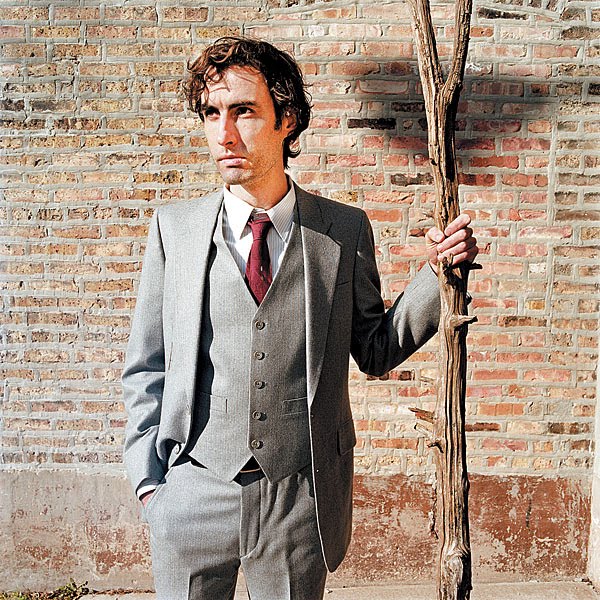
 Signer, songwriter and violinist Andrew Bird is a musician that some would say has nearly perfect pitch.
Bird, who lives in Chicago, completed his debut record entitled "Weather Systems" that the label Righteous Babe Records, founded by singer Ani DeFranco, released in June. He spent time away from the big city, recording the work in a remote valley in western Illinois out of a barn he converted into a studio located several hours away from the bustling urban center he considers home.
He returned from a tour, promoting his 2001 work "The Swimming Hour" with his band Bowl of Fire to work on "Weather Systems."
The album comprises seven lush and layered tracks, along with Bird's musical interpretation of poet Galway Kinnell's work "First Song." Some would say Bird's vocal tone is reminiscent to that of solo artist Jeff Buckley or Radiohead's frontman Thom Yorke, which isn't too far off the mark.
The Beach Reporter recently sat down with Bird, who will return to Los Angeles March 27 at Largo, and talked about his latest work.
The Beach Reporter: The song 'First Song' you're quoting a poem by Galway Kinnell and the tone of the music really augments the story told in the poem. Was it your intention to accent the already poignant words with sonic textures that essentially complement the poem's story?
Bird: Yeah, I discovered that poem when I was 18 or 19 and I had been shuffling the words around for years trying to find the right phrasing. I knew it should be very simple but I never really made any conscious decisions about what should be on it. I always knew it should just be a guitar and vocals. I must have made 50 attempts just to get the right feel. When songs are that simple, there's really nothing to hide behind. No fancy arrangements, it's just got to be musical and so that was one of the hardest songs to record.
What about this poem did you like in particular?
I like the sound of the words. The imagery is beautiful but it was mainly the sound of the poem. His early poems have a real nice round sound to them and it kind of became a standard for my own writing. I'm not very deliberate about it. I'll get a melody in my head and then create those full sounds I need to keep that melody. Then subconsciously words begin to appear and it becomes more conscious as I work on it. For me, it has to have a nice tone so I rarely sacrifice or compromise the melody or the sound for a choice of words. Anything I need to say can't be that important. The main theme of "Weather Systems" is not so much about loneliness but more about trying to quantify things. I've been kind of obsessed with that - trying to measure the immeasurable, gaseous states like clouds or concepts like musicality, what does that mean? You can't really put a finger on it.
Speaking of loneliness, the song 'Lull' seems to be a romantic view of what it feels like to spend time with yourself.
Yeah, it's someone trying to romanticize but also realizing how ridiculous they sound.
Did you experience situations spending time with yourself that kind of inspired this idea of loneliness?
Before making this record I went out the country, fixed up and old barn, turned it into a studio and left Chicago to live in the country which was only 2-1/2 hours away. You definitely figure out what makes you happy at the end of the day because there are no distractions. Some people like to have the noise to remind themselves or the noise to not have to think about awful things. I got into a routine where I'd be out there for five to 10 days at a time, work on music for five or six hours, then go for a walk and then I'd go on tour. I just needed a change because it was starting to feel one-dimensional - touring and then coming back to a big city.
You have a great sense of pitch in your singing and whistling on the album. Because you play the violin, an instrument that kind of requires you to have a really good sense of pitch in order to play in tune, do you think that picking up and learning an instrument like the violin helped your singing?
I started doing more of the simultaneous singing and playing while doing solo shows. I guess I've been stretching my ears out for years. I think I went through a real intense period like when I was 18, 19 and 20. I learned by ear to begin with and I didn't start reading (music) until I was in high school and even then I wasn't a good reader so I would get around that by learning it by ear which went quicker for me. Now it's a bit of a curse sometimes because you can't let anything go, especially in the studio.
The song 'Skin' incorporates a wonderful balance of guitar distortions, violin and vocal lines. How structured are you with your arrangements?
Sometimes Kevin (O'Donnell, drummer) and I would do sound check and I would play some riff. We rarely jam, we are very much against jamming in theory but sometimes it's good. We just don't like to noodle too much, but sometimes at sound check you're just screwing around and I was playing this riff and Kevin would play along with me and then he'd stop and the riff would keep going. That's such a very satisfying effect that I don't have time to explore in most of my songs and "Skin" along with "I" are vignettes of full songs. It's got a lot of strong ideas that I wanted to further develop. Kevin and I have played for 10 years and he inhabits a realm that I don't: percussion. Everything else I have a pretty strong idea about - guitar, bass line, etc. - and there is a reason we've been playing together for so long.